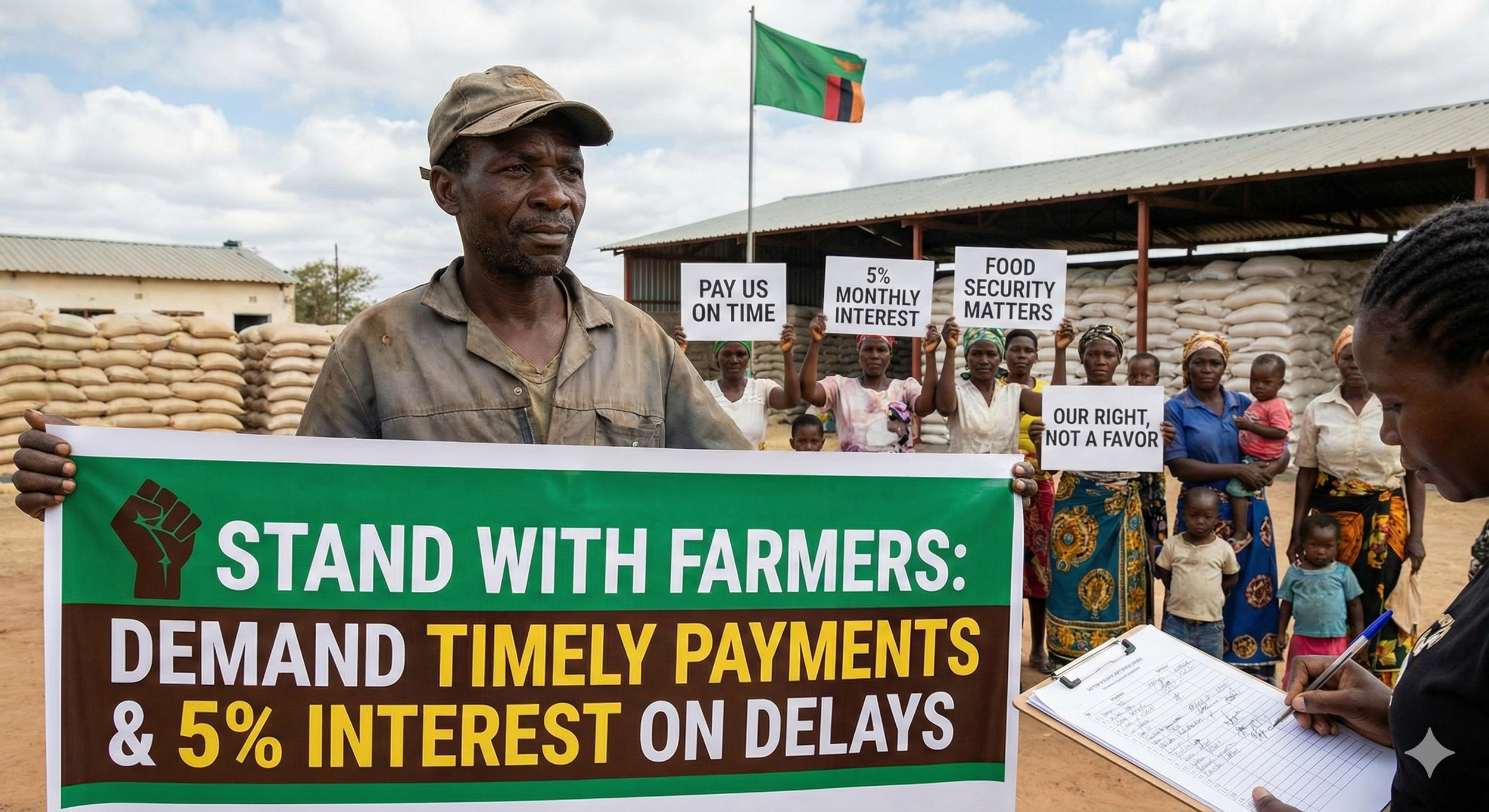
Delayed Payments to Farmers Are Undermining Zambia’s Agricultural Economy
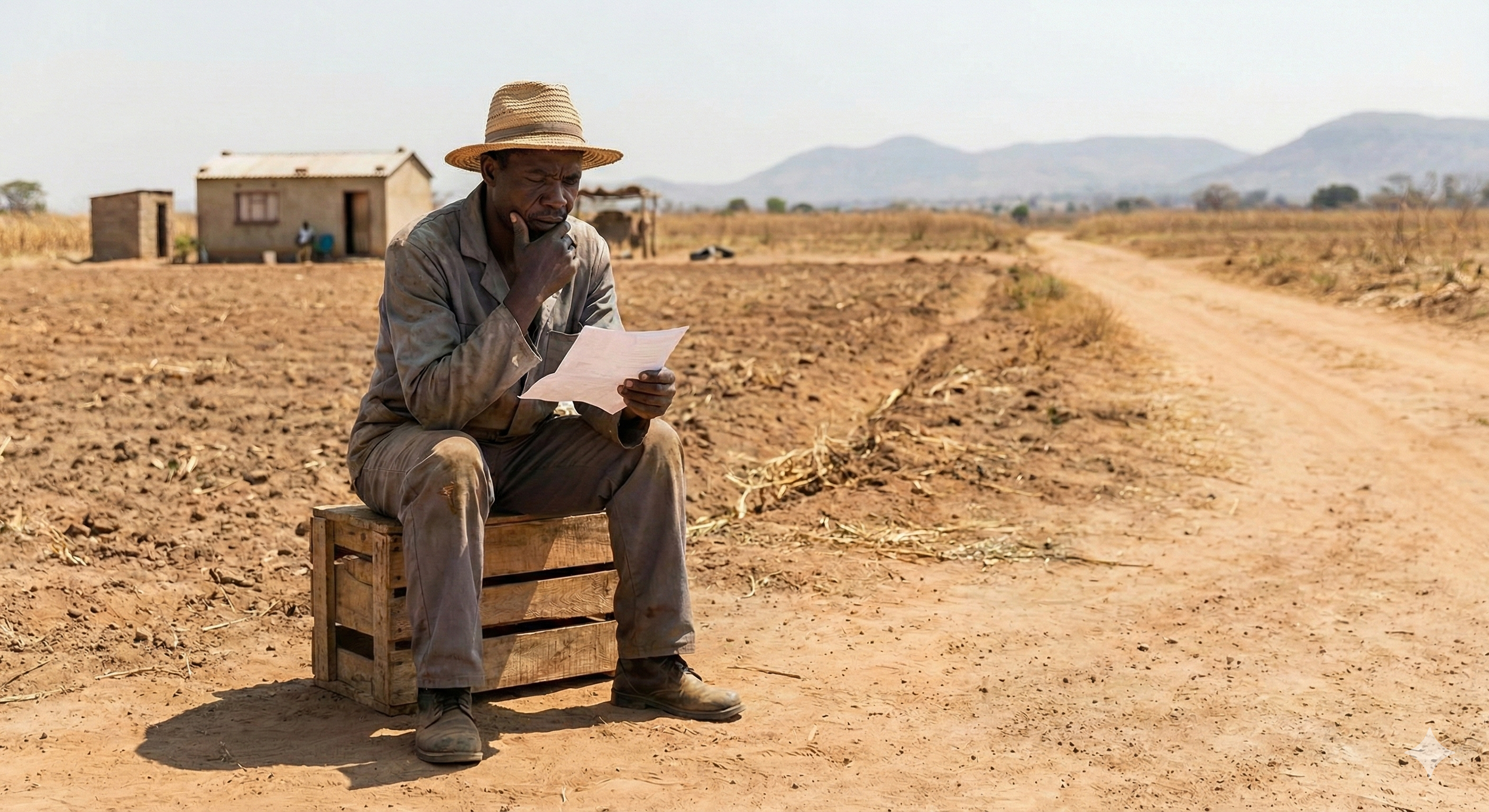
They promised to pay us by January 10th!
Every year, Zambia places heavy expectations on its farmers. They are required to plan months in advance, responsibly secure inputs, plant on time, manage risks, deliver maize as directed, and contribute to national food security. Yet, after fulfilling these obligations, many farmers are left waiting months to be paid.
This is not a minor administrative delay; it is a systemic weakness that continues to erode value across our agricultural economy. I am not writing as an academic or a politician, but as a farmer. I operate a small farm in Nakonde, and like thousands of farmers across the country, I have firsthand experience of what delayed payments mean in practice. When payments are delayed, the damage has already occurred long before the money is finally received.
Delayed payments cost farmers entire planting seasons, reduce yields, destabilize households, and weaken trust in the system. Agriculture is governed by time. Seeds cannot wait. The rains do not wait. Input suppliers do not wait. When a farmer delivers maize and receives payment months later, the loss extends beyond the value of money over time. It includes the lost opportunity to plant at the right time, to purchase fertilizer when needed, and to prepare adequately for the next season.
By the time payment is finally made, the critical planting window has often passed. The result is lower production, reduced incomes, and increased vulnerability. These losses are rarely compensated; they are quietly absorbed by farmers season after season.
The impact goes beyond individual households. When farmers reduce production due to uncertainty, national output declines, and food security is weakened. Consequently, the government is forced to spend more to address problems that could have been avoided with a simple and basic measure: paying farmers on time.
We must confront an uncomfortable but necessary question: in which other sector of our economy is it acceptable to receive goods, delay payment for months, and face no consequences? If a private business operated this way, it would incur penalties, interest, and reputational damage. In agriculture, however, delayed payments have become normalized, despite the real economic harm they cause.
Timely payment should not be viewed as a favor to farmers; it is a contractual obligation and an economic necessity. When delays occur, automatic compensation should apply. Charging interest on late payments is not punishment; it acknowledges the farmer’s loss. When delayed payments lead to late planting, reduced yields, and lower household incomes, farmers have already paid the price. Interest simply recognizes that loss and encourages institutional discipline.
This is not a radical proposal; it is standard practice in functioning markets. Predictability and accountability are the foundations of investment. Farmers, like any other producers, need certainty to plan, invest, and grow.
Zambian farmers are not asking for special treatment; they are asking for fairness. If agriculture is to drive economic growth, employment, and food security, we must stop using farmers as shock absorbers for institutional inefficiencies. We cannot continue to shift the cost of delays onto the very people who feed the nation.
Paying farmers on time must be the norm, not a goal. When systems fail, the cost of that failure should not be borne solely by the farmer standing in the field, waiting.
This issue matters to every Zambian who eats, every family relying on stable food prices, and every policymaker concerned with long-term economic resilience. Delayed payments are not only a farmer's problem; they are a national problem.